
The Smart Guide to Artificial Turf for Modern Landscapes
Homeowners and property managers are increasingly looking for practical alternatives to natural grass. Traditional lawns require frequent watering, mowing, fertilizing, and seasonal care, which can be costly and time-consuming. As lifestyles become busier and sustainability gains importance, many people are turning to artificial turf as a long-term landscaping solution.
Artificial turf offers a clean, green appearance throughout the year without the challenges associated with natural grass. It performs well in high-traffic areas, stays vibrant in various weather conditions, and significantly reduces water usage. These advantages make it an attractive option for residential yards, commercial properties, and recreational spaces.
When searching for reliable artificial turf installation companies near me, homeowners are often seeking expertise, quality materials, and proper installation methods. Professional installers ensure that turf is laid correctly with proper drainage, base preparation, and seamless finishing. This step is critical, as improper installation can reduce lifespan and performance.
Choosing the right professionals also ensures the turf looks natural and blends seamlessly with the surrounding landscape. Experienced teams understand site conditions, usage needs, and design preferences, resulting in a finished surface that is both functional and visually appealing.
What Is Artificial Turf and How Does It Work?
Artificial turf is a synthetic surface designed to mimic the look and feel of natural grass. It is typically made from durable plastic fibers that are engineered to withstand heavy use while maintaining a realistic appearance. Beneath the surface, layers of crushed stone and compacted base materials provide stability and drainage.
Modern turf technology has advanced significantly. Today’s products feature improved blade structure, color variation, and infill materials that enhance comfort and realism. These innovations make artificial turf suitable for a wide range of applications, from home lawns to playgrounds and pet areas.
Benefits of Choosing Artificial Turf
One of the biggest benefits of artificial turf is reduced maintenance. There is no need for mowing, watering, or fertilizing, which saves both time and money. This makes it particularly appealing in regions with water restrictions or harsh climates.
Artificial turf is also highly durable. It can handle heavy foot traffic without developing bare patches or mud. For families with children or pets, this durability ensures a consistently clean and safe outdoor surface.
Installation Process Explained
The installation process begins with site preparation. Existing grass, soil, and debris are removed to create a stable foundation. A compacted base layer is then installed to ensure proper drainage and prevent shifting over time.
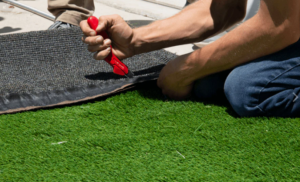
Once the base is prepared, the turf is carefully positioned, trimmed, and secured. Seams are joined precisely to create a smooth, natural look. Finally, infill materials are added to support the turf fibers and improve performance.
Applications for Residential and Commercial Spaces
Artificial turf is versatile and can be used in a variety of settings. Residential applications include front lawns, backyards, rooftop gardens, and pool areas. It creates a polished look while eliminating ongoing lawn care.
In commercial settings, artificial turf is commonly used in office landscapes, retail spaces, sports facilities, and public areas. Its durability and low upkeep make it a cost-effective solution for high-traffic environments.
Environmental and Cost Considerations
From an environmental perspective, artificial turf reduces water consumption and eliminates the need for chemical fertilizers and pesticides. This contributes to water conservation and reduces environmental impact over time.
While the initial installation cost may be higher than natural grass, long-term savings are significant. Reduced maintenance, lower water bills, and minimal replacement needs make artificial turf a financially smart investment over the years.
Maintenance Tips for Long-Term Performance
Although artificial turf is low maintenance, some care is still required. Regular brushing helps keep fibers upright and evenly distributed. Occasional rinsing removes dust, debris, and pet waste.
Inspecting seams and edges periodically ensures the turf remains secure. With proper care, high-quality artificial turf can maintain its appearance and performance for many years.
Enhancing Property Value and Visual Appeal
A well-installed artificial lawn enhances curb appeal by providing a consistently green and tidy appearance. This can positively impact property value, especially in areas where natural grass struggles to thrive.
Beyond aesthetics, artificial turf creates usable outdoor spaces that encourage relaxation and activity. Homeowners can enjoy their outdoor areas without the stress of constant upkeep.
Final Thoughts
Artificial turf is a practical, attractive solution for those seeking low-maintenance outdoor spaces. With proper planning, quality materials, and professional installation, it offers long-lasting performance and visual appeal. Whether for residential or commercial use, artificial turf represents a smart investment in convenience, sustainability, and modern landscape design.